


MSC’s Ascendancy and the Consolidation of Container Shipping

1 April 2025
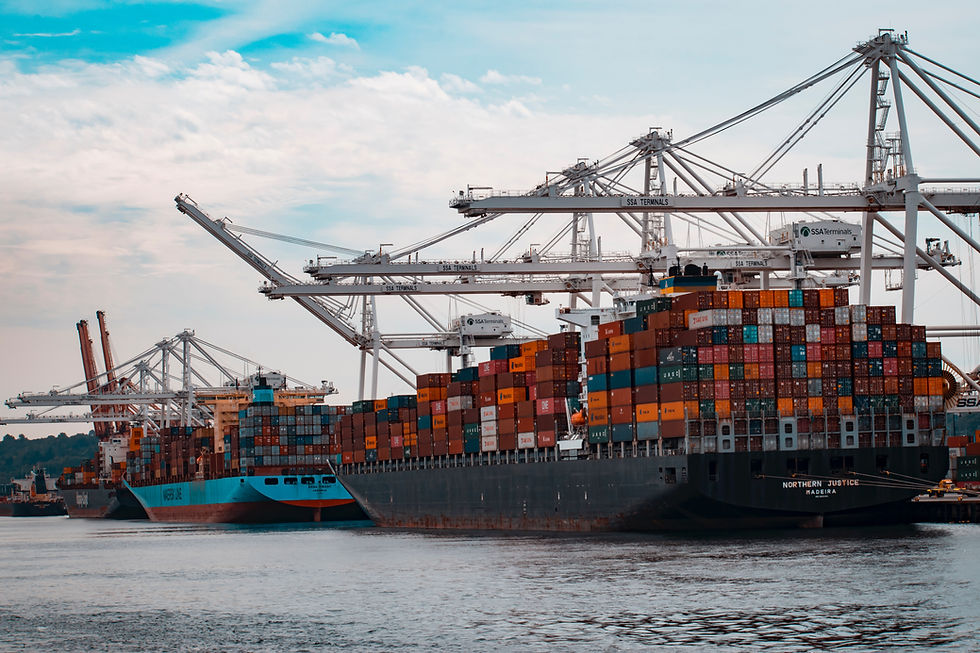
MSC Mediterranean Shipping Company is cementing its position as the world’s largest container line by a widening margin. Over the course of this year, MSC is expanding faster than any other major carrier, contributing 831,400 TEU and accounting for 39 per cent of capacity growth among the major operators. The rise of MSC—and the broader consolidation of the liner sector—raises important questions for shippers, regulators, and the industry at large.
The MSC Growth Story
MSC’s expansion is being driven by a combination of aggressive newbuilding orders, secondhand acquisitions, and a willingness to operate at a scale and pace that is leaving competitors struggling to keep up. The Geneva-headquartered line is investing heavily in ultra-large vessels and expanding its service network into trades and regions where it was previously less prominent.
The company’s strategy stands in marked contrast to that of its principal rival, Maersk, which has pivoted towards integrated logistics and supply chain management. While Maersk emphasises margin over volume, MSC is pursuing market share with single-minded determination.
Consolidation and Competition
The container shipping industry has consolidated substantially over the past decade, through a combination of mergers, acquisitions, and alliance restructuring. The top ten carriers now control a commanding share of global capacity, and the barriers to entry for new participants are formidable. Regulators are paying attention: the FMC in the United States and the European Commission have both scrutinised alliance arrangements and capacity management practices with increasing vigour.
The MSC Flaminia and Limitation of Liability
MSC is also in the legal spotlight this year. The Supreme Court has recently handed down its judgment in MSC Mediterranean Shipping Company SA v Conti 11 Container Schiffahrts-GmbH & Co KG MS “MSC Flaminia” [2025] UKSC 14, a case arising from the catastrophic explosion aboard the MSC Flaminia in the mid-Atlantic in 2012. The court has confirmed that a time charterer can invoke the right to limit its liability under the Convention on Limitation of Liability for Maritime Claims 1976 in respect of claims brought by the shipowner—overturning the Court of Appeal’s narrower interpretation. The decision has significant implications for risk allocation between owners and charterers, and for the structuring of liability insurance in the container sector.
Demolition Activity: A Market Signal
One of the clearest signals of market strength this year is the exceptionally low level of demolition activity. Only twelve container ships, totalling a mere 8,172 TEU, have been scrapped—the lowest level in two decades. This reflects both the continued commercial viability of older tonnage, sustained by the ongoing Red Sea diversion, and an underlying confidence among owners that asset values will hold. Yet the reluctance to scrap is itself a cause for concern. The fleet is growing rapidly, and the absence of a natural disposal mechanism means that the supply-demand imbalance will only widen when market conditions eventually normalise.
Strategic Implications
The consolidation of container shipping is reshaping the industry’s competitive dynamics. For shipowners and operators, the challenge is to find a viable strategic position in a market increasingly dominated by a handful of very large players. The era of the mid-size independent container line is, by and large, over. What replaces it will define the industry for decades to come.
![The wrong charterparty, the right injunction: G2 Ocean v Tokio Marine Brasil Seguradora (The Tanchou Arrow) [2026] EWHC 997 (Comm)](https://static.wixstatic.com/media/7118a7_ea4370dd81924623a30050d1d90f9291~mv2.jpeg/v1/fill/w_275,h_183,al_c,q_80,enc_avif,quality_auto/7118a7_ea4370dd81924623a30050d1d90f9291~mv2.jpeg)

Comments